AI OnlyFans: AI Models, Virtual Creators & the 2026 Rules
By the NaughtyAI editorial team · Published 2026-11-28
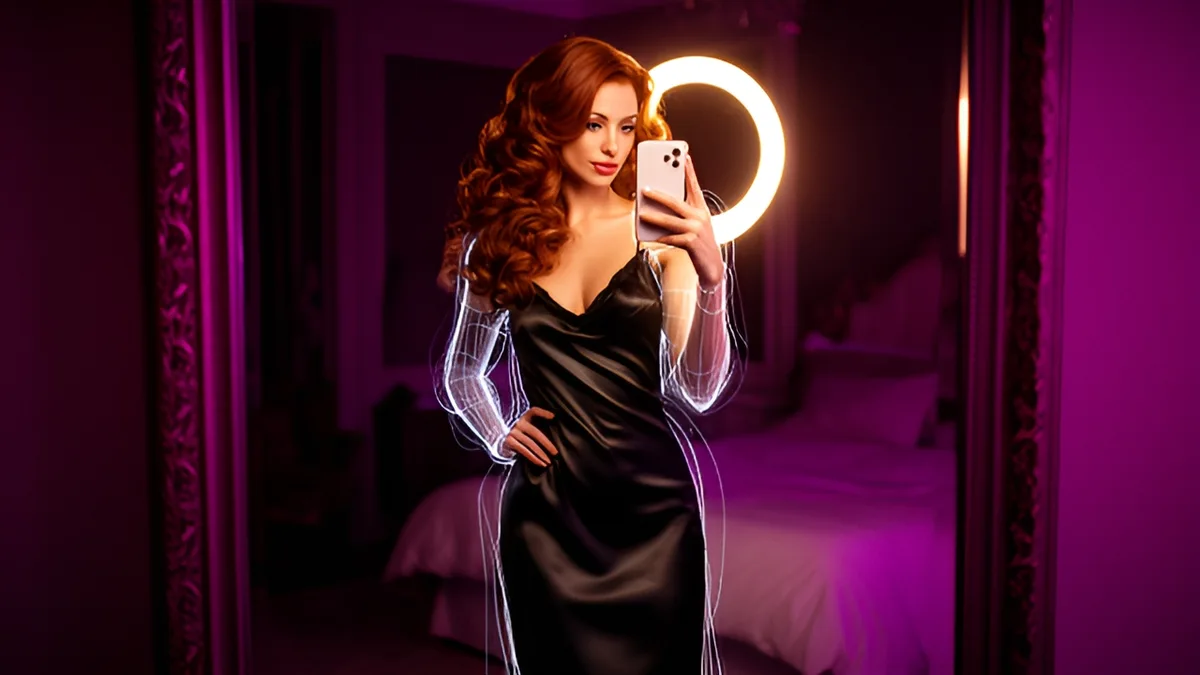
AI OnlyFans explained: what AI models really are, what OnlyFans, Fanvue and Fansly allow in 2026, who writes the DMs, how to spot AI creators and stay safe.
She posts a mirror selfie at midnight. The lighting is perfect, the satin is perfect, the smile is a little too perfect. She replies to your message in under a minute, remembers your dog's name and never, ever has a bad hair day. Is she a creator who is very good at her job, a creator using a few AI tricks, or a character who has never drawn a breath?
Welcome to "AI OnlyFans", one of the hottest and most confusing corners of the adult internet in 2026. Search interest has exploded because two crowds are asking the same question from opposite sides. Fans want to know whether the gorgeous creator they pay every month is real, and whether an AI fantasy can scratch the same itch for less. Creators want to know whether AI can make them more content, more money and more free time without getting their account deleted.
This guide answers both. We will cover what an "AI OnlyFans model" actually is, what OnlyFans, Fanvue and Fansly each allow (quoting their own rules), how AI models are made, the messy truth about AI chat in the DMs, how to spot an AI creator and how to enjoy AI fantasy without getting played. Grab a drink and get comfortable. It's a juicy one.
What does "AI OnlyFans" actually mean?
The phrase gets used for at least four very different things, and mixing them up is how people end up disappointed or banned:
- AI-enhanced human creators. Real, verified people who use AI to retouch photos, swap backgrounds, change outfits, upscale videos or clone their own voice for audio clips. The person is real; some of the pixels are not.
- Fully virtual AI models. Characters who do not exist at all. Every photo, video and voice note is generated, and a human operator runs the account behind the scenes.
- AI chat in the DMs. Real or virtual accounts where some or all of the flirty messages are drafted by an AI model instead of the creator or a human "chatter".
- AI companion apps. Not fan platforms at all, but apps like Candy AI, Nomi and Kindroid where you design your own AI partner, chat with them and, on adult-friendly apps, request spicy images. Many people searching "AI OnlyFans" really want this: a personal fantasy that answers only to them.
Each of these lives under different rules. A fully AI model that thrives on one platform gets banned on another, and an AI-edited selfie that is fine with a label can sink an account without one.
Why AI creators are exploding in 2026
Three forces collided this year.
Image and video models got scary good. Open models and hosted generators can now produce photorealistic people with consistent faces across hundreds of images, plus short video clips and natural-sounding voices. A single operator with a decent GPU can produce a month of content in an afternoon.
The money is real. Fan subscriptions, pay-per-view messages and tips turned the creator economy into a giant business, and anyone who can produce attractive content at scale wants a slice. AI promises content without the photographer, the studio, the travel or the burnout.
Fans are curious. Plenty of paying fans openly enjoy AI characters for what they are: fantasy art with a personality. Others feel betrayed when they discover a "real girl next door" was rendered. That tension is exactly why the platforms have spent 2026 rewriting their rules.
Does OnlyFans allow AI content?
Yes, but only in one narrow lane, and fully AI models are out.
OnlyFans' Terms of Use (the version marked "Last updated: October 2026", section 19) say you can only share content "generated, altered, or enhanced by artificial intelligence" if three conditions are all met: it "clearly features the verified Creator"; "a User can clearly tell that the Content is AI Generated Content with a signifier such as #ai, or #AIGenerated"; and it follows the Terms of Service and Acceptable Use Policy.
In plain English:
- It has to be you. The AI content must show the ID-verified person who owns the account. OnlyFans' Help Center puts it bluntly: "All content posted on OnlyFans must belong to a verified Creator." Its moderation guide lists content that is "wholly AI-generated" among the reasons content and accounts get removed.
- It has to be labeled. A visible #ai or #AIGenerated tag on every AI-touched post, ideally at the start of the caption, not buried in a hashtag pile. The rule covers edits and enhancements, not just images made from scratch.
- It has to be allowed anyway. If a piece would break the rules as a real photo, it breaks them as AI too. The Acceptable Use Policy bans "any explicit image of another person without their consent including an artificially generated image", so deepfakes of other people are a hard no.
What about AI chat? OnlyFans' Help Center says it "does not offer an internal AI chatbot tool for Creators" and that creators "may not directly integrate AI chat bots into the OnlyFans platform." The terms also make creators legally responsible for everything that happens on their account, even when an agency or third party helps run it.
So on OnlyFans, "AI OnlyFans" means a real creator using AI on their own image, clearly labeled. A virtual girlfriend who has never existed does not belong there.
Fanvue: the platform that welcomes AI models
If OnlyFans is the strict club with a velvet rope, Fanvue is the one that put up a neon sign saying AI creators welcome.
Fanvue's Help Centre (updated October 2026) recognizes three account types: fully AI virtual characters, AI personas based on a real person (face swaps or deepfakes, which need that person's verification and signed consent), and AI-enhanced creators who post their own content and use AI for some of it. All three must show an AI label.
The core rules:
- Disclose it. AI content must be clearly disclosed, and a fully AI account must never tell fans it is a real person. If a fan asks whether they are talking to an AI model, the answer must be yes. You can stay in character afterwards, but you cannot dodge, joke or deny.
- Verify the human behind it. The account owner completes ID verification with a government ID and a selfie, even if their face never appears. The ID is never shown on the profile.
- No real people without consent. No AI content that looks like a real, identifiable person, celebrities and other creators included, unless that person is verified and has given documented consent.
- Adults only, clearly. AI characters must look clearly adult, and Fanvue says prompts, captions or stated ages do not override how the content looks.
- Your own work. No AI content made from other people's photos or videos, and no copyrighted characters.
Break the rules and Fanvue may remove content, hold payouts, deduct earnings, or suspend or close the account. For anyone building a fully virtual creator, Fanvue is currently the most clearly documented home.
Fansly: virtual personas yes, photoreal AI no
Fansly sits in a third place. Its help article on AI content (updated July 2026) opens with: "Photorealistic AI-generated content is not allowed on Fansly", and adds that labeling it as AI does not make photorealistic or lifelike AI content permissible.
Its terms bar three uses of AI without Fansly's written authorization: photorealistic or lifelike content substantially generated by AI (including deepfakes and face swaps); AI systems that interact with users "to generate personalized responses, imagery, or experiences without human oversight"; and anything that passes AI material off as authentic human work.
What Fansly does allow is a non-photorealistic virtual persona, think a stylized, illustrated or anime-style character, as long as the human behind it registers and verifies with their real legal identity. If that is your vibe, our guide to the AI hentai generator covers how artists build those characters.
The quick platform cheat sheet
- OnlyFans: AI allowed only if it shows the verified creator and carries an #ai label. Fully AI models: no. Integrated AI chatbots: no.
- Fanvue: fully AI models allowed with owner verification and an AI label. Must admit being AI when a fan asks.
- Fansly: non-photoreal virtual personas allowed with owner verification. Photoreal AI: no, even when labeled. AI chat needs human oversight.
- Everywhere: no deepfakes of real people without documented consent, and every character must clearly look adult.
Rules move fast, so always read each platform's current terms before you upload a single file.
How AI models are made (the short version)
Curious how one person runs a "model" who posts every day? The workflow usually looks like this:
- Design the character. A written character sheet: age (always clearly adult), face shape, eye color, hair, body type, signature outfits, personality, backstory and voice. Consistency sells, and fans notice when a nose changes between posts.
- Generate a face and lock it in. Creators generate a reference set, then keep the character consistent with character-reference features in hosted apps or by training a small personal LoRA on a local model. Our best NSFW AI image generators list covers the hosted options, including Promptchan, Seduced AI and OurDream.
- Build scenes with prompts. Outfit, pose, location, lighting and camera angle, changed one variable at a time. Our NSFW AI prompts guide has templates that work.
- Add motion and voice. Short clips from adult AI video generators, plus a synthetic voice for audio messages.
- Label, schedule, post. On the platforms that allow it, with the AI label switched on.
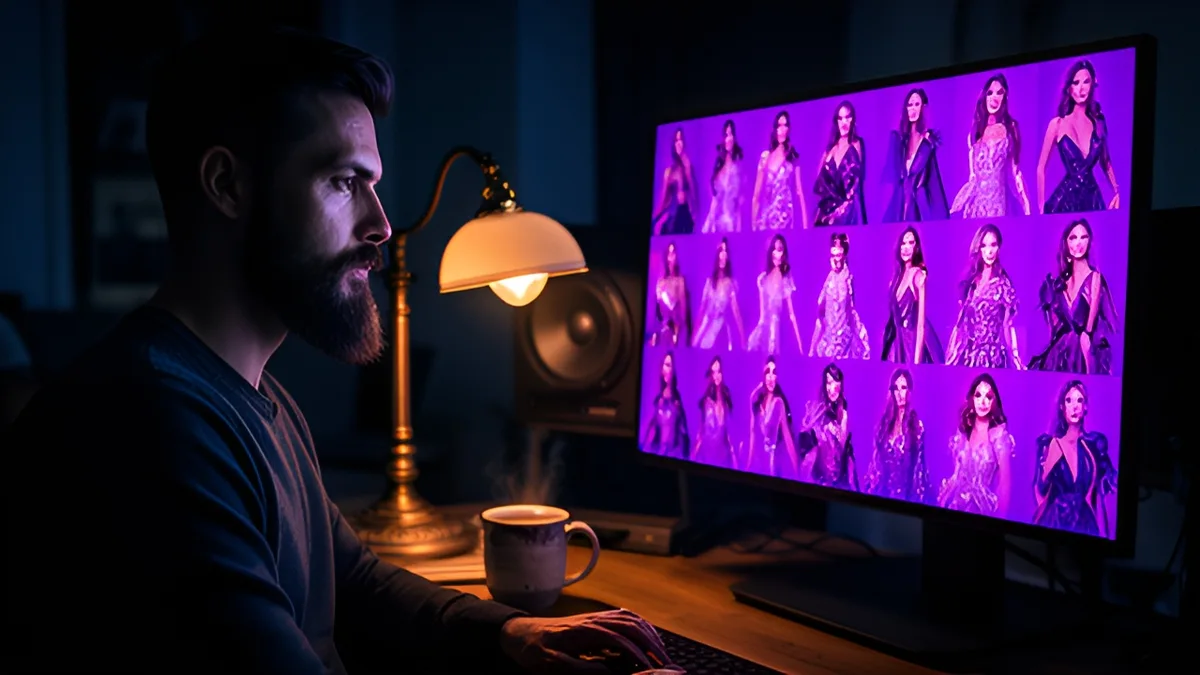
The hard part is not making one pretty picture. It is making the same fictional woman, or man, look like herself across five hundred pictures while staying inside every platform rule.
The DM question: who is really typing?
Here is the uncomfortable secret of the fan-subscription world: the person flirting with you in the DMs was often never the creator. Big accounts have long used human "chatters", paid staff who message fans in the creator's voice. AI promises to do the same job faster and cheaper, around the clock.
The rules draw clear lines here. OnlyFans bars directly integrated AI chatbots and holds creators responsible for every message sent from their account. Fansly bans AI that generates personalized responses "without human oversight". Fanvue allows AI accounts to chat in character but requires them to admit being AI if a fan asks.
For fans, the takeaway is simple: a fast, flawless, endlessly attentive reply is not proof of a real person. If you specifically want the experience of chatting with an AI lover who is honest about being an AI, you will get a better, cheaper and more private version from a dedicated companion app. Our AI sexting guide and AI voice sex chat guide show how good those have become.
How to spot an AI creator
AI images are getting harder to catch, but there are still tells:
- Look for the label. On platforms that require disclosure, check the profile name, bio and captions for an AI label or an #ai tag.
- Check the hands, jewelry and text. Fingers that merge, earrings that change shape between frames, and blurry or nonsense lettering on signs and clothing are classic giveaways.
- Study the backgrounds. Repeated furniture, warped door frames, impossible reflections and rooms that change layout between posts.
- Watch for too-perfect consistency. The same flawless skin and studio lighting in every single post, with no candid, messy, imperfect moments.
- Ask for something specific. A real creator can usually hold up a sign with your username or film a quick custom clip. Fanvue's rules require AI accounts to answer honestly if you ask whether they are AI.
- Be wary of "100% real" claims. Loud authenticity claims paired with impossibly polished content are a red flag, and Fanvue specifically forbids bios that suggest an AI account is a real person.
None of these is proof on its own. Together, they paint a pretty clear picture.
Is AI OnlyFans worth it for fans?
It depends on what turns you on.
If you love a specific real human, their personality, their body, their story, then AI content is not a replacement, and you deserve to know what you are paying for. Look for honest labels and support creators who are transparent.
If what you really crave is a fantasy that bends to your exact tastes, an AI character can be more satisfying than any subscription. And here is the twist: you do not need a fan platform for that. Adult companion apps let you design the character yourself, chat as long as you like and generate images on demand, usually for a single monthly fee instead of endless pay-per-view unlocks. Start with our best AI girlfriend apps or AI boyfriend apps, or browse the best NSFW AI chatbots.
Either way, decide with your eyes open. Paying for fantasy is fine. Paying for a lie is not.
Is AI OnlyFans worth it for creators?
For real creators, AI can be a genuine superpower when used honestly: retouching, background swaps, outfit ideas, captions, scheduling and even AI versions of your own voice. The golden rules are to label everything AI touches, keep your own likeness at the center on OnlyFans, and never let a bot send messages you have not approved.
For people dreaming of a fully virtual model, the reality check is that the market is crowded, platforms like OnlyFans and Fansly do not want photoreal AI characters, and the ones that do, like Fanvue, demand clear labeling and honesty in chat. Success still takes taste, consistency, storytelling and an audience who loves the character for what she is.
The hard lines: consent, deepfakes and the law
Fun stops where real people get hurt. Every platform above bans AI sexual content of a real, identifiable person without their verified consent, and the law is catching up fast.
In the US, the TAKE IT DOWN Act, signed in May 2025, criminalizes publishing non-consensual intimate imagery, including AI-generated deepfakes. Since May 19, 2026, covered platforms must remove reported images, plus known identical copies, within 48 hours of a valid request, and the FTC can seek civil penalties of up to $53,088 per violation. Many other countries have passed or are drafting similar laws.
Our rules for staying on the right side of all of it:
- Never use a real person's face, body or voice without their documented consent. Not a celebrity, not a creator, not an ex.
- Keep every character unmistakably adult in look, styling and context. Stated ages do not fix a youthful appearance.
- Label AI content honestly, every time, on every platform.
- Protect your own privacy. Treat anything you upload or type into a cloud service as something that could leak someday.

The bottom line
"AI OnlyFans" is not one thing. It is real creators using AI to work smarter, virtual characters built for platforms that welcome them, and a growing grey zone of bots in the DMs. In 2026 the rules finally caught up: OnlyFans wants AI content to be you and labeled, Fanvue welcomes fully AI models that are honest about it, and Fansly keeps photoreal AI out altogether.
For fans, the sexiest move is curiosity with your eyes open: enjoy AI fantasy when it is honestly labeled, and if what you want is a personal AI lover, skip the paywall maze and build one in a companion app. For creators, AI is a brilliant assistant and a terrible liar, so use it for the first job, never the second.
Now go have fun. Just make sure you know who, or what, is on the other side of the screen.
Sources
- OnlyFans Terms of Use (October 2026) (OnlyFans)
- Does OnlyFans Allow AI Content? 2026 Rules (Jaded MGMT)
- AI content on Fanvue: what's allowed (Fanvue Help Centre)
- AI labels and disclosure (Fanvue Help Centre)
- Fansly AI Content Policy: What the Rule Says and Means (Fansly API)
- Cruz, Klobuchar Mark One Year of TAKE IT DOWN Act as FTC Enforcement Begins (U.S. Senate Commerce Committee)
- FTC warns 12 major tech firms of violating Take It Down Act (The Record)
Frequently asked questions
What is an AI OnlyFans model?
It is a fan-subscription creator whose photos, videos or voice are generated by AI instead of captured on camera. Some are fully virtual characters run by a human operator, others are real creators who use AI to edit or enhance their own content. The term is also used loosely for AI companion apps where you design your own virtual partner.
Does OnlyFans allow AI-generated content?
Only in a narrow way. Under its October 2026 Terms of Use, AI-generated, altered or enhanced content must clearly feature the verified creator, carry a visible label such as #ai or #AIGenerated, and follow all other rules. Fully AI-generated accounts and AI explicit images of other people are not allowed, and creators may not integrate AI chatbots into the platform.
Which platform allows fully AI creators?
Fanvue openly welcomes fully AI accounts, as long as the owner verifies their identity, every account shows an AI label, characters clearly look adult and no real person is depicted without documented consent. Fansly allows only non-photorealistic virtual personas, and OnlyFans requires AI content to feature the verified creator.
How can I tell if a creator is AI?
Check for an AI label or #ai tag, then look for classic tells: merging fingers, jewelry or backgrounds that change between posts, garbled text and suspiciously flawless lighting in every photo. Asking for a specific custom clip also helps, and on Fanvue an AI account must answer yes if you ask whether it is AI.
Are OnlyFans DMs written by AI?
Sometimes the person messaging you is not the creator, because many large accounts use paid human chatters, and some use AI tools. OnlyFans says creators may not directly integrate AI chatbots and holds them responsible for every message, Fansly bans AI chat without human oversight, and Fanvue lets AI accounts chat in character but they must admit being AI when asked.
Is making AI adult content of a real person legal?
Not without their consent, and increasingly it is a crime. In the US, the TAKE IT DOWN Act criminalizes publishing non-consensual intimate images, including AI deepfakes, and since May 19, 2026 covered platforms must remove reported images within 48 hours. Every major fan platform also bans deepfakes of real people without verified, documented consent.